
Law Enforcement Jobs
FBI, CIA, & Home Land Security Jobs
Investigators, Police Officers, Secret Service, FBI, CIA, Special Agents, Prison Guards, and Others

Federal law enforcement jobs are available in most federal agencies. However, the largest numbers of law enforcement jobs are with the Department of Homeland Security, the Justice, Treasury, and Defense Departments. There are law enforcement jobs available nationwide and overseas. Homeland Security (DHS) was formed after the September 11th 2001 attacks to protect the nation against terrorism. The department was the first addition in over forty years to the executive branch. Explore federal law enforcement careers on this site to find a suitable position that matches your experience, education, and background.
Homeland Security is the third largest department, employing over 180,000 federal workers. This agency consolidated 22 agencies from various departments to unify the war on terror. The Department of Homeland Security (DHS) has had a significant impact on federal law enforcement jobs and many law enforcement functions were transferred to DHS.
The Department of Homeland Security (DHS) is hiring hundreds of criminal investigators, deportation officers, Customs and Border Protection officers, Border Patrol agents, special agents, physical security specialists, police officers, emergency management specialists, intelligence analysts, and more. If you know someone who is interested in a rewarding career with the Department, please encourage them to participate in one of their upcoming webinar sessions. The webinars will provide information on DHS career opportunities; the law enforcement hiring process and timelines; special hiring authorities; effective resume writing; and how to create a profile on USAJOBS. These two-hour webinars will be offered twelve times over the next two months, and they are open to the public.
Law Enforcement Menu
- Law Enforcement Introduction
- Earnings (Pay & Benefits)
- Job Outlook
- Working Conditions
- Law Enforcement Jobs
- Agency Listing (Number employed by job title with links to job lists)
- CIA Jobs
- FBI Jobs
- Airport Security Screeners
- Customs & Border Patrol Agents
- Federal Police Jobs & Federal Security Jobs
-
- Law, Legal, and Attorney Jobs (GS-900 Group)
- Investigative group job listings – Investigators, inspectors, agents, and officers (GS-1800 Group)
- Police, Park Ranger and Correctional Officer job listings
- Hiring Agencies and Job Listings – Includes employment numbers
- Jobs requiring a security clearance
- 2024 Law Enforcement Special Pay Rates
 Clearance Jobs Career Center – For those with active or current security clearances.
- Federal Resume Writing Service
- Additional Information (Working conditions, training)
- Qualification Standards
- Career & Job Search resources
- Agency Information (All agencies)
- 141 Agency Web Sites
Introduction
The federal government employs law enforcement personnel in more than 40 job series (see table 11-1 for detailed information. Most agencies incorporate federal law enforcement jobs in some capacity or another. It’s important to realize that work in law enforcement is not limited to investigative, police, compliance and security positions. There are tens of thousands of federal employees working in occupations that provide direct support to these groups. Use our site to search all of the federal law enforcement careers available.
Many federal law enforcement jobs including investigative jobs are subject to age requirements, applicants must be 21 years of age and under age of 37 when they receive the appointment. Other law enforcement positions require you to be 21 years old and you must be a United States citizen. Age requirements often vary between federal agencies. The job announcement always lists job qualifications for the position. If you desire to work in the law enforcement field, and you are over age 37, you have limited options and may have to work in a support position that doesn’t have an age limit.
FBI agents must investigate over 200 categories of Federal laws and they conduct highly sensitive national security investigations. They often conduct surveillance, monitor authorized wiretaps, investigate white-collar crime, examine business records, or participate in undercover assignments. FBI Agents investigate a wide range of criminal activities. Numerous FBI jobs are filled to investigate organized and financial crimes, public corruption, bank robbery, kidnapping, terrorism, espionage, drug trafficking, and cybercrime.
Many other Federal agents enforce laws including the U.S. Drug Enforcement Administration (DEA) that enforces regulations relating to illegal drugs. The U.S. marshals and deputy marshals work for the Federal courts to provide security and to ensure the judicial system operates effectively. The Bureau of Alcohol, Tobacco, Firearms, and Explosives agents enforce and investigate Federal firearms and explosives laws violations, as well as Federal alcohol and tobacco tax regulations. The battle against terrorism is managed by special agents with the U.S. Department of State Bureau of Diplomatic Security.
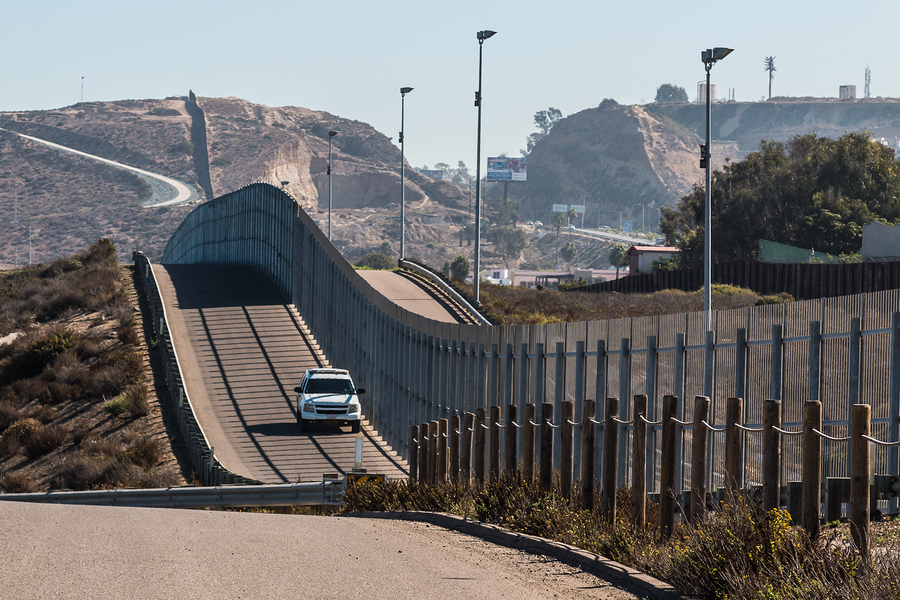
The Department of Homeland Security (DHS) offers many law enforcement jobs with Immigration and Customs Enforcement, Customs and Border Protection, and the U.S. Secret Service. More than 8,000 miles of international land and water boundaries are protected by U.S. Border Patrol agents. Immigration inspectors’ interview and examine people seeking entry into the United States and its territories. Customs inspectors enforce laws governing imports and exports by inspecting cargo, baggage, and articles worn or carried by people, vessels, vehicles, trains, and aircraft entering or leaving the United States. Federal Air Marshals provide air security by guarding against attacks targeting U.S. aircraft, passengers, and crews. U.S. Secret Service special agents and U.S. Secret Service uniformed officers protect the President, the Vice President, their immediate families, and other public officials. Secret Service special agents also investigate counterfeiting, forgery of Government checks or bonds, and fraudulent use of credit cards.
The Department of Homeland Security transferred functions from the Department of the Treasury, Justice, HHS, Defense, FBI, Secret Service, GSA, Energy, Agriculture, Transportation and the U.S. Coast Guard. The new organization is comprised of five major Directorates and the losing agency is listed in parentheses.
Border and Transportation Security
U.S. Custom Service (Treasury)
Immigration& Naturalization Service (Justice)
Federal Protective Service
Transportation Security (Transportation)
Federal Law Enforcement Training Center (Justice)
Animal & Plant Health Inspection Service (Agriculture)
Office for Domestic Preparedness (Justice)
Emergency Preparedness and Response
Federal Emergency Management Agency (FEMA)
Strategic National Stockpile & National Disaster Medical System (HHS)
Nuclear Incident Response Team (Energy)
Domestic Emergency Support Team (Justice)
National Domestic Preparedness Office (FBI)
Information Analysis and Infrastructure Protection
Federal Computer Incident Response Center (GSA)
National Communications System (Defense)
National Infrastructure Protection Center (FBI)
Energy Security and Assurance Program (Energy)
Science and Technology
CBRN Countermeasures Program (Energy)
Environmental Measurement Laboratory (Energy)
National BW Defense Analysis Center (Defense)
Plum Island Animal Disease Center (Agriculture)
Management
The Secret Service and the Coast Guard are also with the DHS. They will remain intact and report directly to the Secretary. In addition, the Immigration and Naturalization Service (INS) adjudications and benefits programs report direct to the Deputy Secretary as the U.S. Citizenship and Immigration Service.
Other Federal agencies employ special agents and police that carry firearms and have arrest powers. These agencies include the Bureau of Indian Affairs Office of Law Enforcement, the Postal Service, the Forest Service, and the National Park Service.
The Book of U.S. Government Jobs describes the federal law enforcement field in depth with contact information, job descriptions, and internet links to agency recruiters. You will find information about specific organizations like Alcohol, Tobacco & Firearms (ATF), U.S. Marshals, Investigators, the U.S. Secrete Service, Diplomatic Security, the National Park Service, US Border patrol, Federal Protective Services, CIA & FBI, and many more.
Earnings

The median annual wage for police, criminal investigators and detectives was $71,380 in May 2022 for both private and government sectors according to the Bureau of Labor Statistics. Federal worker’ s median annual wages for this group was $89,130 for this same period. The media wage for customs and immigration inspectors was $81,920 in 2018 while the media wage for tax examiners and revenue agents was $58,440. The median wage is the wage at which half the workers in an occupation earned more than that amount and half earned less.
To determine salaries for desired positions review the federal job announcement. We link to agency job vacancies for all occupations.
Federal law provides special salary rates to Federal employees who serve in the law enforcement field. Additionally, Federal special agents and inspectors receive law enforcement availability pay (LEAP)—equal to 25 percent of the agent’s grade and step—awarded because of the large amount of overtime that these agents are expected to work. Salaries were slightly higher in selected areas where the prevailing local pay level was higher. Because Federal agents may be eligible for a special law enforcement benefits package, applicants should ask their recruiter for more information.
In addition to the common benefits—paid vacation, sick leave, and medical and life insurance—most law enforcement careers provide officers with special allowances for uniforms an early 20 year retirement.
Jobs Outlook
There are attractive federal law enforcement careers for public service because the jobs are challenging and involve much personal responsibility. Many law enforcement officer positions qualify for the Law Enforcement Officer (LEO) retirement program where they can retire after 20 years of service at age 50, or 25 years of service at any age. The number of qualified candidates exceeds the number of job openings in federal law enforcement agencies because of the attractive benefits and salaries that are offered. This results in higher hiring standards and employer selectivity. Competition is considerable for higher- paying jobs with both state and federal agencies and police departments in more affluent areas. The best opportunities are for those applicants with military police experience, college training in police science, or both.
Employment of detectives and police is anticipated to increase on pare with average for all occupations for the foreseeable future. Concerns about drug-related crimes and a more security-conscious society is contributing to increasing demand for police services. Federal level employment growth is the result of the war on terror; however, continuing budgetary constraints are a consideration for all law enforcement agencies. Keep these factors in mind when considering a federal law enforcement job.
Working Conditions
Federal law enforcement work is often considered dangerous and very stressful. In addition to the obvious dangers associated with criminal confrontations, law enforcement officers must be constantly alert and ready to deal appropriately with a number of other threatening situations. Many law enforcement officers are confronted with situations that result in death and suffering from criminal behavior and accidents. Law enforcement careers often impact officers’ private lives.
Most officers work 40-hour weeks and are paid overtime. Shift work is essential to provide around the clock services. The newer recruits and officers frequently work weekends, holidays, and nights. Police officers and detectives are subject to work whenever their services are needed and they often work long hours during investigations. In most jurisdictions, whether on or off duty, officers are expected to be armed and to exercise their arrest authority whenever necessary.
Some federal agents such as DEA special agents and U.S. Secret Service agents travel on very short notice frequently. They may relocate a number of times over the course of their careers. Some special agents in agencies such as the Border Patrol work outdoors in rugged terrain for long periods and in all kinds of weather.
Additional Information
- Information Resources – Visit over 141 agency employment web sites for further information about employment opportunities with specific agencies.
- Qualification Standards
- Correctional Officers
- Criminal Investigators